
Karatu, Tanzania is a busy farming town in the green highlands between Lake Manyara and the Ngorongoro Crater. Most travellers know it as the last stop before the crater gate, a place to sleep before a game drive. That undersells it. Karatu has coffee estates, waterfalls, forest trails, a lively monthly market and its own culture, and it is the most practical base in northern Tanzania for the crater, Lake Manyara and Lake Eyasi.
This guide covers where Karatu is and how to get there, the town’s people and history, what to see and do, practical tips on money and getting around, and how long to stay.
Where is Karatu?
Karatu is the main town of Karatu District in Tanzania’s Arusha Region. It sits at about 1,500 metres on the slopes that rise from the Great Rift Valley towards the Ngorongoro highlands. The town lies on the tarmac road that runs west from Arusha, past Mto wa Mbu and Lake Manyara, to Lodoare Gate, the main entrance to the Ngorongoro Conservation Area.
| From Karatu to | Approximate distance | Approximate time |
|---|---|---|
| Lodoare Gate (Ngorongoro) | A short drive on tarmac | 20 to 40 minutes |
| Ngorongoro Crater floor | Via the rim and descent road | About 1.5 hours |
| Lake Manyara National Park gate | Down the escarpment | About 30 minutes |
| Lake Manyara airstrip | About 20 km | 30 to 45 minutes |
| Lake Eyasi (Mangola) | Partly on dirt road | About 1 to 1.5 hours |
| Tarangire National Park | Via Mto wa Mbu and Makuyuni | 1.5 to 2 hours |
| Arusha | About 140 km | 2.5 to 3 hours |
| Central Serengeti (Seronera) | Through the conservation area | 5 to 6 hours |
Times depend on traffic, roadworks and how often you stop. For detailed directions from Arusha and the airports, see our drive times and directions.
How to get to Karatu
By road
Most visitors arrive by road from Arusha with their safari guide. The road is tarmac the whole way, with a steep climb up the Rift Valley escarpment just after Mto wa Mbu and fine views back over Lake Manyara. Expect speed bumps through villages and police speed checks. Self-drivers should avoid driving after dark, when livestock, cyclists and unlit vehicles share the road.
By air
Kilimanjaro International Airport (JRO) is the main international gateway, about 3.5 hours by road. For a faster arrival, small scheduled planes fly from Arusha, Kilimanjaro and the Serengeti airstrips to the Lake Manyara airstrip, 30 to 45 minutes from most Karatu lodges. Many fly-in safaris use this route to reach the crater.
Karatu’s people and history
The farmland around Karatu is the heartland of the Iraqw, a Cushitic-speaking people whose language is unrelated to the Bantu languages spoken across most of Tanzania. The Iraqw are known as skilled farmers, and the patchwork of maize, wheat, beans and pigeon pea fields around town is largely their work. Traditional Iraqw homes were partly dug into hillsides, which helped protect families and livestock in times of raids.
Maasai herders, Datoga pastoralists and people from across Tanzania also live in and around the town. Swahili is the common language, and you will hear “Karibu” (welcome) everywhere.
The highlands above town were settled by European farmers in the early twentieth century. Several of today’s coffee estates and lodges, including Gibb’s Farm and the farms around the Oldeani area, date from that era. As the Ngorongoro Crater became one of Africa’s best-known safari destinations, Karatu turned into the service town for the crater: fuel, food, guesthouses, safari camps and, later, lodges of every level.
What to do in Karatu
Most guests spend their main day in Karatu on the crater floor. The extra days are where the town shows its character.
1. Visit a coffee estate
The volcanic soils and cool nights around Karatu grow excellent arabica coffee. Several estates offer tours that walk you from the bush to the roasted bean, often ending with a tasting. Gibb’s Farm, Shangri-La Estate (which produces Kifaru Coffee), Blackburn Estate and the farms around Oldeani are among the names you will hear. Your lodge or guide can book a visit.
2. Hike to Endoro Falls and the elephant caves
In the Ngorongoro Forest above town, a trail leads through montane forest to Endoro Falls and to the “elephant caves”, hollows that elephants and buffalo have dug into mineral-rich banks over generations to lick the salts. The trail enters the conservation area, so a ranger escort is required and entry fees apply. Mornings are cooler and better for birds. Sightings of elephant are possible but not certain; you are more likely to see dung, footprints, colobus and blue monkeys, baboons and forest birds. Read our full guide to Endoro Falls and the elephant caves.
3. Go to the Karatu market
The town market is busy every day with fruit, vegetables, spices, kangas and household goods. A larger regional market is traditionally held on the 7th of each month, when traders and herders arrive from the surrounding villages with livestock, clothing, pottery and crafts. Dates can shift, so ask your guide. Bargaining is normal and friendly. Carry small Tanzanian shilling notes and keep valuables out of sight in the crowds.
4. Take a cultural walk with a local guide
Community tourism programmes such as Ganako Karatu Cultural Tourism offer guided walks through farms and villages, visits to local brick-makers, blacksmiths and homesteads, and tastings of local food and drink. The better approach is to book through a community programme, so the money goes to the families you visit, and to ask before taking photos of people or homes. If a visit starts to feel like a show, it is fine to tell your guide you would rather just walk and talk.
5. Walk, cycle or run in the hills
The dirt roads around Karatu make good walking and mountain biking routes, with views over farmland to the Rift Valley and Lake Manyara. Many lodges offer guided walks or bikes. Wildlife wanders outside the parks here too: elephants and buffalo sometimes cross farmland near the forest edge at night, so stay on routes your hosts recommend.
6. Visit Mto wa Mbu
Thirty to forty minutes down the escarpment, Mto wa Mbu is a lively market town known for its red bananas, rice paddies, crafts and mix of cultures. A guided village walk or tuk-tuk tour is an easy half-day from Karatu. Read our guide to Mto wa Mbu.
7. Meet the Hadzabe and Datoga at Lake Eyasi
About an hour south-west of Karatu, the hot, dry Lake Eyasi basin is home to the Hadzabe, one of Africa’s last hunter-gatherer peoples, and to Datoga pastoralists known for their metalwork. Visits start very early, so many travellers spend a night near the lake. Read our respectful visitor’s guide to the Hadzabe.
8. Climb Mlima Nyoka for the view
Mlima Nyoka, “Snake Hill”, is a short hike near town with wide views over Karatu, the farmland and the highlands. Go early or late in the day for softer light and cooler air.
9. Support a local project
Karatu has several respected community organisations, including FAME (Foundation for African Medicine and Education), a hospital that serves the district. Some welcome visitors by appointment. The most useful help is usually arranged in advance and focused on what the organisation actually asks for, rather than short visits to children’s homes.
10. Slow down
Karatu is a good place to do nothing at all for an afternoon. After a 6:00 AM crater start, a swim, a massage, a garden walk or a book by the fire is often the best part of the day.
Karatu as a safari base
Karatu’s location is its biggest strength. From one bed you can reach three very different places in under 90 minutes: the Ngorongoro Crater, Lake Manyara National Park and Lake Eyasi. You also save on park fees compared with sleeping inside the conservation area, because lodges in Karatu do not carry the nightly concession fee charged to rim lodges.
The trade-off is the morning drive. Guests on the crater rim reach the crater floor first, around 6:30 AM. From Karatu, expect to be on the floor around 7:00 to 7:30 AM. For most travellers the warmer nights, larger lodges and lower fees outweigh that hour. Read our full comparison of crater rim vs Karatu and our guide to where to stay near Ngorongoro Crater.
A sample three-night stay
- Day 1: arrive from Tarangire or Arusha, stop in Mto wa Mbu for lunch, settle in by mid-afternoon.
- Day 2: early start for a full day on the Ngorongoro Crater floor, back by mid-afternoon for the pool or spa.
- Day 3: morning hike to Endoro Falls or a coffee tour; afternoon game drive in Lake Manyara, or a quiet day at the lodge.
- Day 4: continue to the Serengeti, or drive or fly back to Arusha.
Practical tips for Karatu
Money
Major Tanzanian banks have branches and ATMs in the town centre, but machines can run out of cash or reject foreign cards, so do not rely on them alone. Carry some Tanzanian shillings in small notes for markets, tips and small purchases. US dollars are widely accepted at lodges and for tips. Some lodges, including ours, are cashless and take cards or bank transfer only.
Health
Karatu’s altitude keeps mosquitoes lower than on the coast, but malaria is still present in the region. Follow your doctor’s advice on prophylaxis, use repellent in the evening and sleep under a net where one is provided. Drink bottled or filtered water. FAME hospital and clinics in town handle routine care; serious cases are usually referred to Arusha.
Getting around
Most visitors move with their safari guide and vehicle. In town, bajaji (tuk-tuks) and boda-boda (motorbike taxis) are cheap, but motorbike taxis carry real road risks. Ask your lodge to arrange a car for evening trips.
Safety
Karatu is a relaxed, friendly town and most visitors have no problems. Use normal precautions: keep phones and cameras out of sight in crowds, avoid walking on unlit roads at night and use registered guides. For a wider view, see our guide to whether Tanzania is safe for a safari.
Connectivity and power
Mobile coverage is good in and around town. Power cuts happen, so most lodges run generators; ours runs on the national grid with automatic backup generators around the clock.
Karatu weather in brief
At about 1,500 metres, Karatu is mild all year: warm days, cool nights and two rainy seasons, roughly March to May and November to December. June to August brings the coolest nights, when a fire in the evening is welcome. See our full Karatu weather guide.
Where to stay in Karatu
Karatu has the widest choice of accommodation around Ngorongoro, from campsites and simple guesthouses in town to garden lodges, farm stays and luxury estates on the forest edge. Lodges closer to the forest, such as those in the Tloma area, are quieter and greener than those on the main road. Compare 15 options in our guide to the best lodges in Karatu.
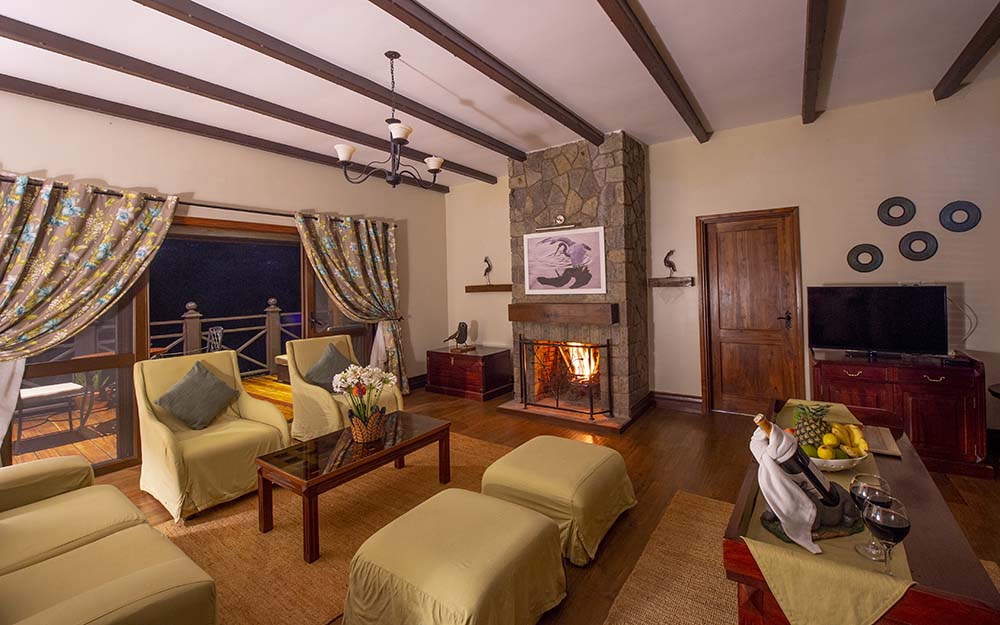
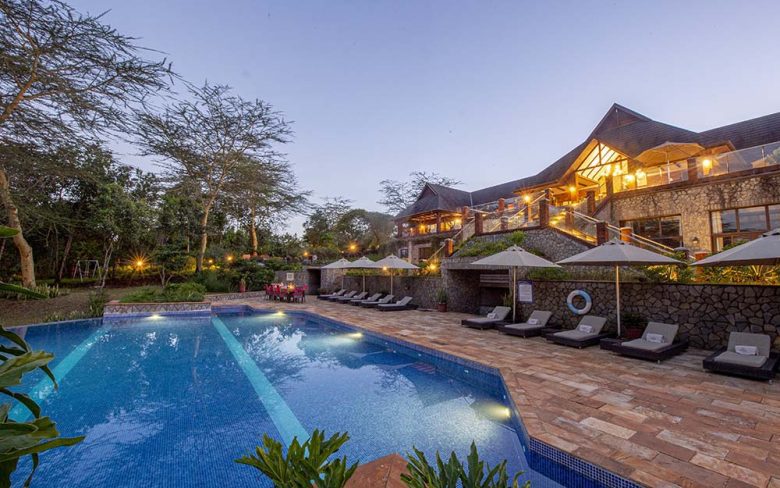
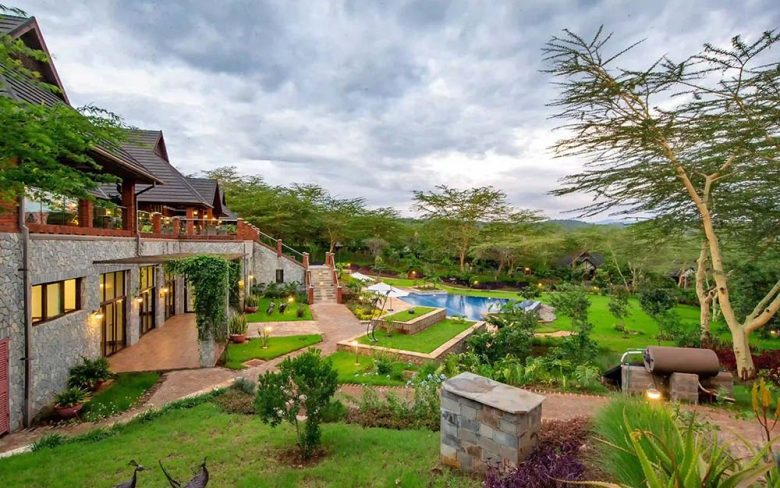
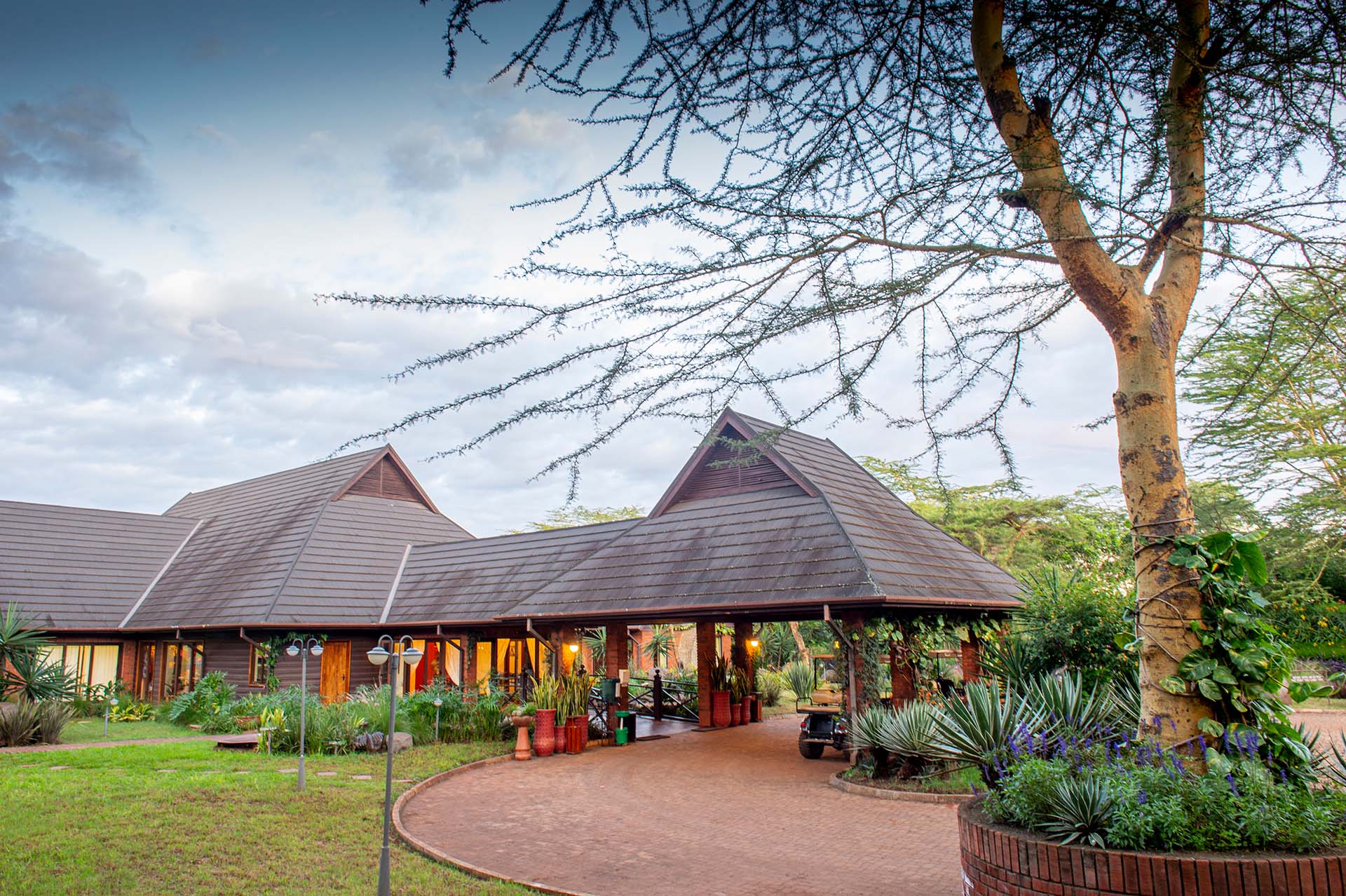
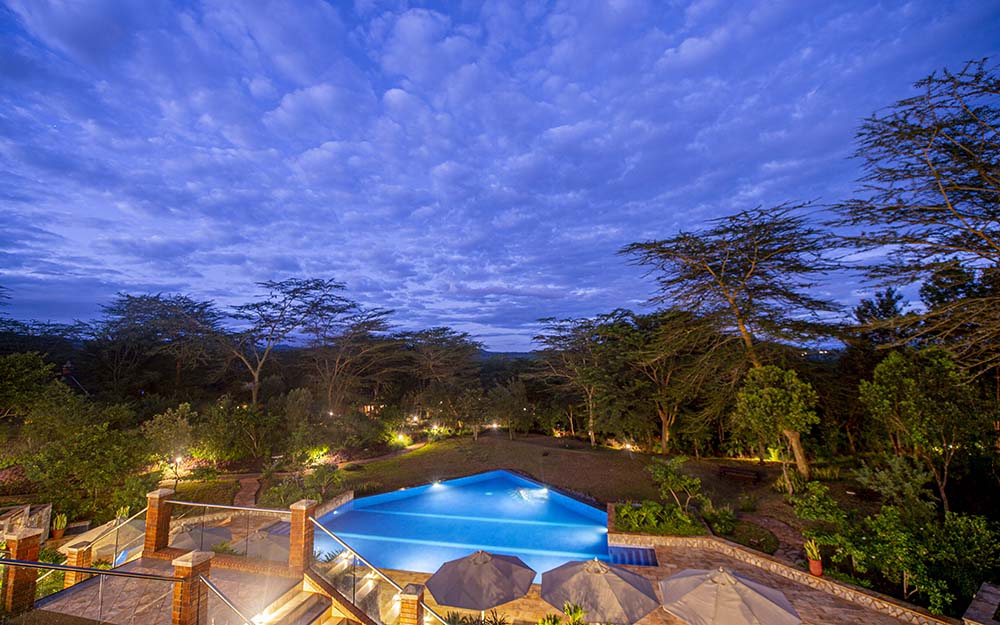
Our lodge, The Retreat at Ngorongoro, sits on a private estate in Tloma overlooking the Ngorongoro Forest, 20 to 30 minutes from Lodoare Gate. It has 30 standalone villas with wood-burning fireplaces and private decks, an infinity pool, Oasis Spa, a tennis court, a 1.5 km walking trail, a small lake for kayaking and birdwatching, and food from its own organic orchard and gardens. Families can book linked or two-bedroom villas, and stays are available on full board or all inclusive. See our villas and family stays.
How long to stay in Karatu
Two nights is the minimum for a relaxed crater day. Three nights lets you add Lake Manyara, a coffee tour, Endoro Falls or a cultural walk without rushing. Four nights or more suits families, honeymooners and anyone who wants a slower safari with a proper break between long game drives.
Questions about Karatu, Tanzania
What is Karatu known for?
Karatu is known as the gateway town to the Ngorongoro Crater. It is also known for coffee farms, Iraqw farming culture, its monthly market and its mild highland climate.
Is Karatu worth visiting?
Yes. Beyond being a convenient base for the crater, Karatu offers coffee tours, forest hikes, waterfalls, markets and cultural walks, and it is close to Lake Manyara and Lake Eyasi.
How far is Karatu from the Ngorongoro Crater?
Most Karatu lodges are 20 to 40 minutes from Lodoare Gate. Allow about another hour to drive up to the rim and down to the crater floor.
How far is Karatu from Arusha?
About 140 km, or 2.5 to 3 hours by road on tarmac. Small planes also fly to the Lake Manyara airstrip, 30 to 45 minutes from Karatu.
Are there ATMs in Karatu?
Yes, there are bank ATMs in the town centre, but they can be unreliable for foreign cards. Bring some cash in small notes as a back-up.
What language is spoken in Karatu?
Swahili is the common language. Iraqw is widely spoken in the surrounding villages, and English is spoken at lodges and by guides.
Ready to plan your stay? Check availability or send us your dates and our team will suggest the right villa.