
The Hadzabe (also called the Hadza) are one of the last hunter-gatherer peoples in Africa. An estimated 1,300 to 1,500 Hadzabe live in the dry bush around Lake Eyasi in northern Tanzania, and many still rely heavily on hunting with bows and gathering wild food. Visiting them is possible as a day trip from Karatu, but it is not a show, and how you visit matters as much as whether you go.
This guide explains who the Hadzabe are, what a visit is really like, how to make sure your money helps rather than harms, and how to plan the trip from the Ngorongoro area.
Who are the Hadzabe?
The Hadzabe have lived in the Lake Eyasi basin and the nearby Yaeda Valley for a very long time. Unlike their farming and herding neighbours, they have never adopted agriculture or kept livestock. Food comes from the land: game shot with bow and arrow, honey, baobab fruit, berries and starchy wild tubers dug up by the women.
A few things make Hadzabe culture distinct:
- Language: Hadzane uses click sounds and is considered a language isolate, meaning linguists have not linked it to any other language family.
- Social life: camps are small and move with the seasons. There are no chiefs, food is shared, and decisions are made together.
- Honey: the Hadzabe whistle to the greater honeyguide, a bird that leads them to wild bees’ nests. After the honey is taken, the bird eats the wax. It is one of the best-known partnerships between people and a wild animal.
- Bows and arrows: men make their own bows and arrows. Some arrows are tipped with plant poison for larger game.
Their way of life is under pressure. Farming, cattle grazing and settlement have taken over much of their land, and wild food is harder to find. Since 2011, some Hadzabe communities have held communal land titles, and a carbon-offset project in the Yaeda-Eyasi area, run with the company Carbon Tanzania and later joined by Datoga neighbours, pays communities to protect their dryland forest. Critics question how much say the Hadzabe have in such projects, but it has given the land a cash value. Responsible tourism can add to that income. Badly run tourism can do the opposite.
What a Hadzabe visit is really like
A typical visit starts before dawn. You drive from Karatu to Mangola, the main village near Lake Eyasi, pick up a local guide and continue on sandy tracks into the bush to a Hadzabe camp. The best time is first light, when the men set out to hunt.
The hunt
You follow a small group of hunters on foot through thorny bush for an hour or two. They move fast and quietly, reading tracks and listening for birds. Most of the time they come back with small animals such as birds, hyrax or dik-dik, or nothing at all. If an animal is shot, it is cooked and eaten on the spot. This is food, not a demonstration, and it is not for the faint-hearted.
Back at camp
Afterwards you might see the men make fire with two sticks in under a minute, try a bow and arrow on a target, or watch the women dig for tubers and gather berries. There may be singing and dancing. Some visitors buy simple handmade bows, arrows or beaded items.
Is it authentic?
This is the question most travellers ask, and the honest answer is: partly. The Hadzabe groups who receive visitors are used to tourists, and some visits feel staged, especially when they are short, crowded or run late in the day after the real hunt is over. Others feel natural, because you are joining the group on their terms. What matters most is timing, group size and who organises the visit.
- Go early. A dawn visit is far more real than a midday stop.
- Keep the group small. Two to six visitors feels very different from a convoy.
- Give it time. A rushed hour feels like a performance. A full morning, or a night near the lake, lets people relax.
- Use a reputable local guide who speaks Hadzane or works closely with the community.
How to visit responsibly
Visits to vulnerable communities raise real ethical questions. Done well, they pay people fairly and support a way of life that has economic value. Done badly, they turn people into a spectacle, and money can fuel problems such as alcohol misuse. A few simple rules help.
- Pay the fee, not individuals. Visits carry a community or cultural fee, arranged through your guide. Do not hand out cash, sweets or alcohol yourself.
- Ask before you photograph. Your guide can ask on your behalf. Accept a no.
- Do not direct the action. Do not ask people to “do the hunt again” for a picture.
- Buy crafts directly if you want to support people. A bow or a bracelet bought at camp puts money where it belongs.
- Dress modestly and wear closed shoes. The bush is thorny and hot.
- Think about the hunt. If you would be upset to see an animal killed, tell your guide. You can stay at camp instead.
The Datoga: the other people of Lake Eyasi
Many visits to the Hadzabe also stop at a Datoga homestead. The Datoga are pastoralists who keep cattle, goats and donkeys, and they are known as skilled blacksmiths. You may see them melt scrap metal and hammer it into arrowheads, bracelets and jewellery, some of which they trade to the Hadzabe. Datoga women often wear leather clothing decorated with beads and have decorative facial markings.
The same rules apply: go with a local guide, ask before taking photos and buy directly if you want to support the family.
How to plan a Hadzabe visit from Karatu
Getting there
Lake Eyasi is south-west of Karatu. The first part is good road; the last part is a rough, dusty dirt track. Allow about 1 to 1.5 hours each way, longer after rain. The track can be difficult in the long rains of April and May, so check conditions then.
Timing
To join a dawn hunt from Karatu, expect to leave around 4:30 to 5:00 AM. Many travellers prefer to spend a night near the lake, at one of the camps or lodges around Mangola, and do the visit the next morning before driving back to Karatu or on to the crater.
Fees
There is usually a district registration fee per vehicle and a community or cultural fee for the visit, plus the local guide. Amounts change, so ask your safari operator to include them in your quote rather than paying on the spot.
What to bring
- Closed walking shoes and long, light trousers for thorny bush.
- A hat, sunscreen and plenty of water. The basin is much hotter than Karatu.
- A dust scarf for the drive.
- Small notes if you plan to buy crafts.
Combining it with your safari
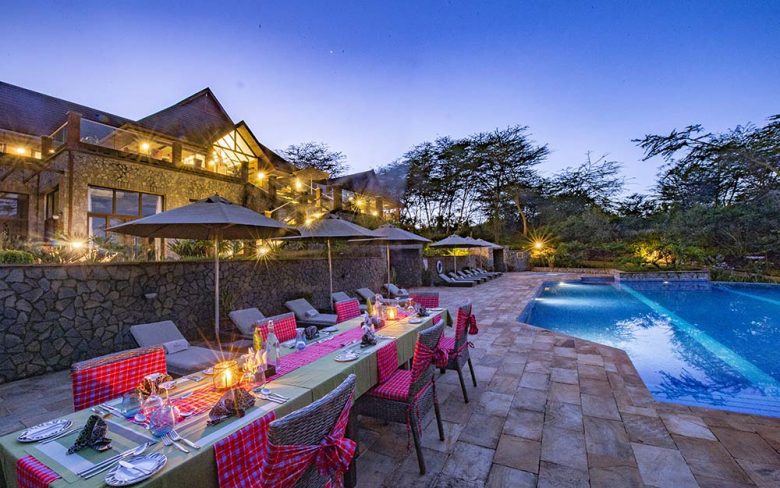
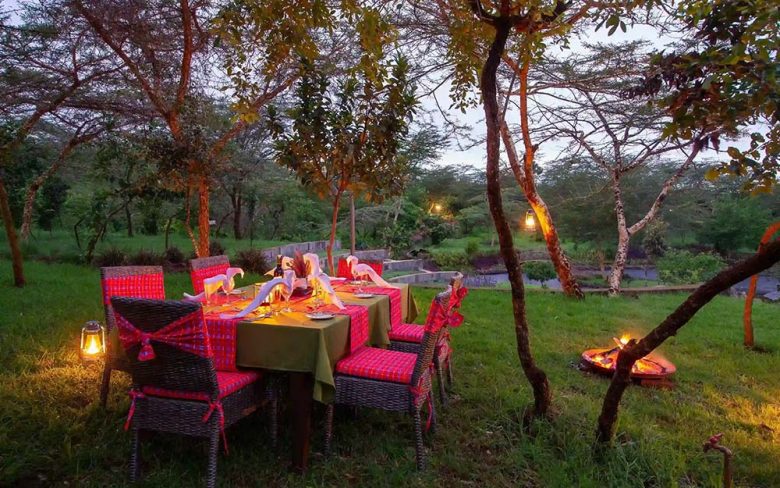
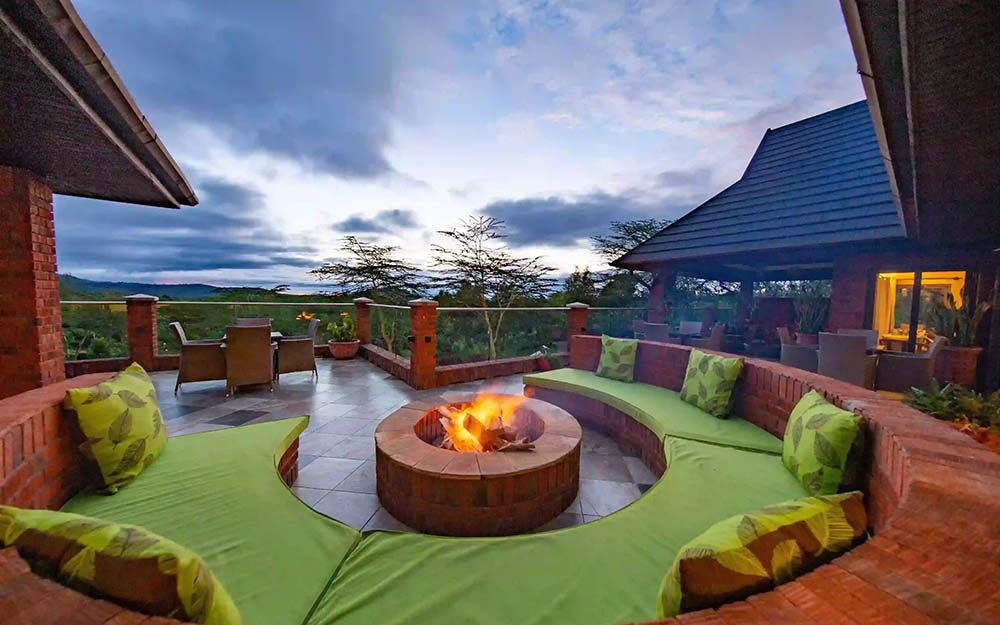
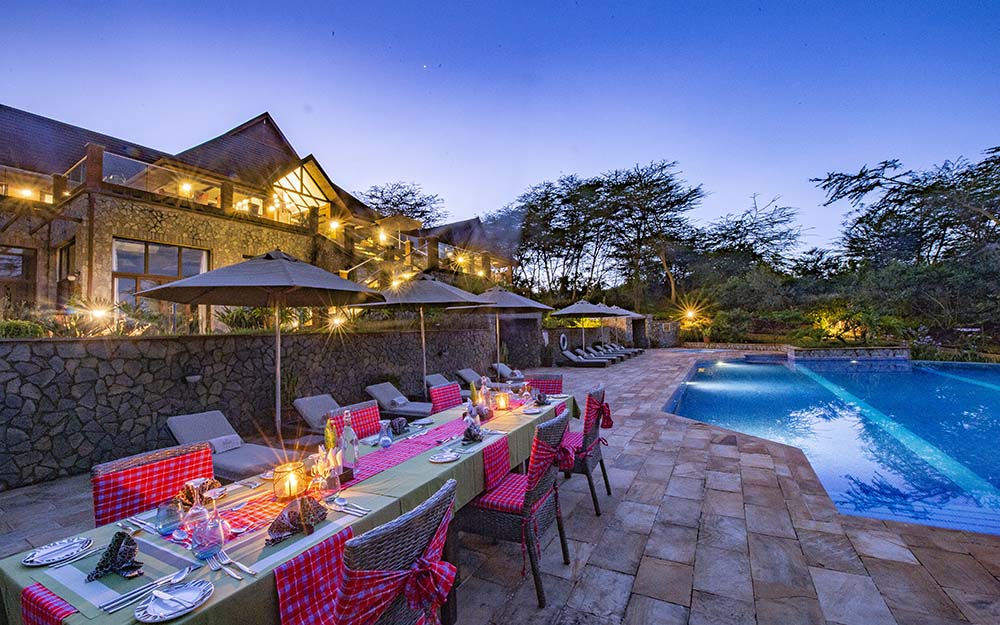
The easiest plan is three nights in Karatu: one day on the Ngorongoro Crater floor, one day for Lake Eyasi, and time to rest. Our lodge is in the Tloma area of Karatu, about an hour from the lake, and can prepare an early breakfast box for Eyasi days. After a dusty morning in the bush, the pool and a hot shower are very welcome. See our villas or read our Karatu town guide for other things to do nearby.
Questions about visiting the Hadzabe
Where do the Hadzabe live?
Around Lake Eyasi and the Yaeda Valley in northern Tanzania, south-west of Karatu and the Ngorongoro Crater.
How many Hadzabe are there?
Estimates usually put the population at around 1,300 to 1,500 people, many of whom still rely heavily on hunting and gathering.
What language do the Hadzabe speak?
Hadzane, a language with click sounds that is not related to any other known language. A local guide or translator is usually needed.
What do the Hadzabe eat?
Wild game hunted with bows and arrows, honey, baobab fruit, berries and wild tubers dug up by the women.
Is visiting the Hadzabe ethical?
It can be, if you visit early with a small group, use a reputable local guide, pay the official community fee rather than handing out cash, ask before taking photos and do not ask for performances.
Can you visit the Hadzabe as a day trip from Karatu?
Yes, but expect a very early start, around 4:30 to 5:00 AM, to join the dawn hunt. A night near Lake Eyasi makes the visit more relaxed.
Will I see a hunt?
You will usually walk with the hunters, but a kill is never certain. When it happens, the animal is eaten on the spot.
Planning a stay that includes Lake Eyasi? Check availability and tell our team you would like an early start.