
Tanzanian food is simple, filling and full of flavour: grilled meat, slow-cooked stews, coconut curries on the coast, and staples like ugali, rice and plantain. On a safari you will eat a lot of international dishes at lodges, but the best meals are often the local ones. Knowing what to order, and what you are being served, makes every meal part of the journey.
This guide lists the Tanzanian dishes worth trying on safari, the snacks and drinks to look out for, and tips on eating safely.
Tanzanian staples
- Ugali: a stiff porridge of maize flour, the country’s most common staple. It is eaten with the right hand: roll a small ball, press a dent with your thumb and scoop up stew or greens.
- Wali: rice, often cooked plain or with coconut (wali wa nazi) on the coast.
- Ndizi: bananas and plantains, boiled, fried or cooked into stews. Northern Tanzania grows dozens of varieties.
- Chapati: soft, flaky flatbread, introduced by Indian communities and now everywhere.
- Maharage: beans, often cooked in coconut milk or tomato sauce.
Traditional Tanzanian dishes to try on safari
| Dish | What it is | Where you will find it |
|---|---|---|
| Nyama choma | Grilled meat, usually goat or beef, often eaten with kachumbari salad | Local bars and restaurants, lodge barbecues |
| Mshikaki | Marinated meat skewers grilled over charcoal | Street stalls and night markets |
| Chipsi mayai | A chip omelette: fries cooked into eggs | Roadside cafés everywhere |
| Ndizi nyama | Plantain and beef stew | Northern Tanzania, especially around Kilimanjaro and Arusha |
| Mtori | A smooth banana and meat soup | The north, a traditional Chagga dish |
| Pilau | Rice spiced with cumin, cardamom, cinnamon and cloves, often with meat | Everywhere, especially at celebrations |
| Biryani | Layered spiced rice and meat | Coastal and Indian-influenced restaurants |
| Samaki wa kupaka | Grilled fish in coconut curry sauce | Zanzibar and the coast |
| Mchicha | Spinach-like greens cooked with onion, tomato and sometimes peanut | Everywhere, alongside ugali |
| Zanzibar pizza | A stuffed, griddle-fried pancake, savoury or sweet | Forodhani night market, Stone Town |
Regional food in northern Tanzania
Tanzania has more than 120 ethnic groups, and food changes from region to region. Around the safari areas, a few traditions stand out.
- Chagga food (Kilimanjaro): bananas cooked in many ways, including mtori soup and machalari, a banana and meat stew, plus home-brewed banana beer.
- Maasai food: traditionally milk, meat and sometimes blood from cattle, with roasted goat at celebrations. Visitors may be offered tea or milk at a boma.
- Iraqw farming food (Karatu): maize, beans, wheat and pigeon pea from the fields around town, often in simple stews and porridge.
- Indian-Tanzanian food (Arusha and towns): samosas, biryani, curries and chapati, a legacy of long-established Indian communities.
- Swahili coastal food (Zanzibar and Dar es Salaam): coconut curries, spiced rice, seafood and street snacks shaped by centuries of Indian Ocean trade.
A typical Tanzanian breakfast
Breakfast is often chai with mandazi or chapati, sometimes with eggs, fruit or uji, a thin millet or maize porridge. In towns, chipsi mayai and grilled meat skewers are popular at any time of day. Lodges serve full breakfasts with local fruit, eggs, breads and Tanzanian coffee.
Useful food words in Swahili
| Swahili | English |
|---|---|
| Chakula | Food |
| Maji | Water |
| Nyama | Meat |
| Kuku | Chicken |
| Samaki | Fish |
| Mboga | Vegetables |
| Matunda | Fruit |
| Pilipili | Chilli |
| Bila nyama | Without meat |
| Chakula kitamu | The food is tasty |
Snacks and street food
- Mandazi: lightly sweet fried dough, often flavoured with cardamom or coconut, great with tea.
- Sambusa: triangular pastries filled with spiced meat or vegetables.
- Mihogo: cassava, fried or roasted, sometimes with chilli and lime.
- Roasted maize: sold at roadside fires.
- Fresh fruit: mangoes, pineapples, passion fruit, papaya and small red bananas, especially in Mto wa Mbu.
Drinks
- Chai: sweet milky tea, often spiced with ginger or cardamom.
- Coffee: northern Tanzania grows excellent arabica around Kilimanjaro, Arusha and Karatu. Try it at a coffee farm.
- Local beers: Kilimanjaro, Safari, Serengeti and Tusker are widely available.
- Banana beer: a cloudy, home-brewed drink found in Mto wa Mbu and the Kilimanjaro region.
- Konyagi: a popular Tanzanian spirit.
- Fresh juices: passion, mango and sugarcane juice.
Eating on safari
Most safari lodges serve a mix of international and Tanzanian food, with buffets or set menus. On game drives, lunch is often a packed box. If you want more local dishes, just ask; many kitchens are happy to cook ugali, pilau or a stew.
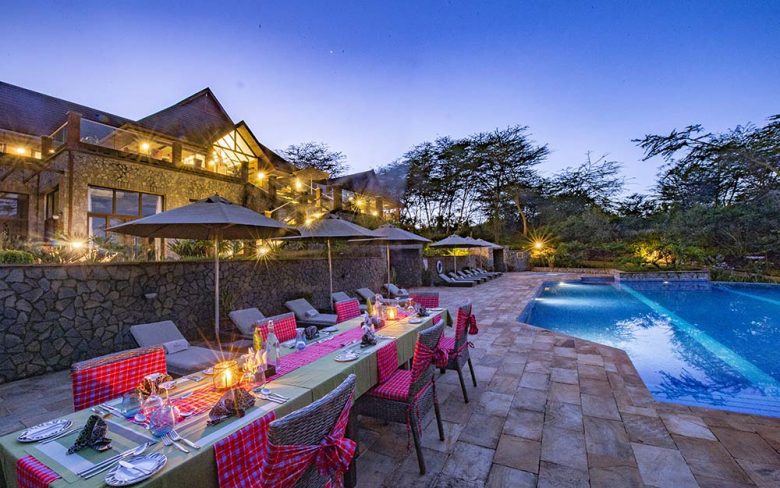
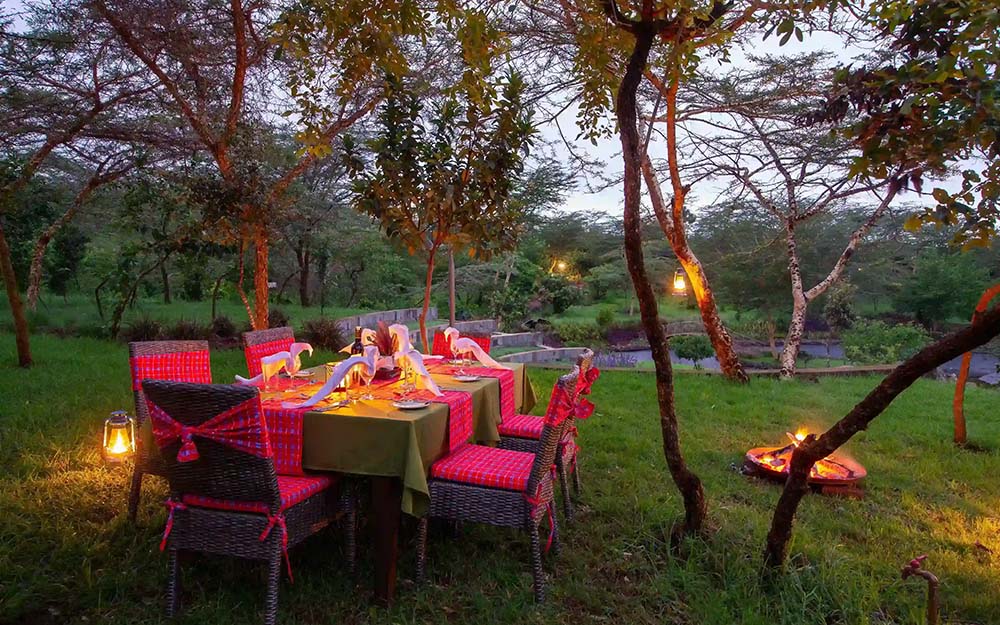
At The Retreat at Ngorongoro, much of the food comes from our own organic orchard and gardens. Our Kipepeo Dining Room serves farm-to-table meals with Tanzanian and international dishes, and we cater for vegan, gluten-free and allergy requirements. Guests can also book a candlelit dinner by the pool or a bush meal. See our dining page.
Eating safely
- Drink bottled or filtered water, and avoid ice in local places unless you know it is safe.
- Choose food that is freshly cooked and served hot.
- Peel fruit yourself.
- Wash or sanitise your hands before eating, especially when eating with your hands.
- Tell lodges about allergies and dietary needs before you arrive.
Food etiquette
- Eat with your right hand when eating by hand.
- It is polite to accept tea when offered in a home.
- Say “chakula kitamu” (the food is tasty) to the cook.
- In local restaurants, tipping is not always expected but is appreciated.
Want to see where the food comes from? Read our Karatu town guide for coffee tours and markets, or the Mto wa Mbu guide for banana farms.
Questions about Tanzanian food
What is the national dish of Tanzania?
Ugali, a stiff maize porridge, is the most common staple and is often called the national dish, usually served with stew, greens or nyama choma.
Is Tanzanian food spicy?
Most dishes are mild. Coastal food uses more spices, and chilli sauce is usually served on the side.
What food is served on safari?
Lodges serve international and Tanzanian dishes, often buffet style. Packed lunches are common on long game drives.
Can vegetarians eat well in Tanzania?
Yes. Beans, greens, rice, chapati, plantains and vegetable curries are widely available, and lodges cater for vegetarian and vegan diets.
Hungry for a farm-to-table stay? Check availability at The Retreat at Ngorongoro.