
Tarangire National Park is famous for two things you will remember long after your safari: huge herds of elephants and ancient baobab trees. In the dry season, from roughly June to October, the Tarangire River becomes the only reliable water for miles, and wildlife pours in from the surrounding plains. On a good day you can see hundreds of elephants, along with lions, giraffes, zebras, buffalo and some of the best birdlife in northern Tanzania.
Tarangire is often treated as a quick stop on the way to the Ngorongoro Crater. This guide shows why it deserves more time, and covers what you can see, the best season, fees, the honest downsides, and how to plan a visit from Arusha or Karatu.
Tarangire at a glance
| Fact | Detail |
|---|---|
| Location | Manyara Region, south of the main Arusha to Karatu road, turning off at Makuyuni |
| Size | About 2,850 km² |
| Managed by | Tanzania National Parks (TANAPA) |
| Entry fee | About US$59 per non-resident adult and about US$18 per child aged 5 to 15, per day (published 2026 rates) |
| Best time | June to October, when wildlife gathers along the river |
| Known for | Elephant herds, baobabs, the Tarangire River, Silale Swamp, birdlife |
| From Arusha | About 2 to 2.5 hours by road |
| From Karatu | About 1.5 to 2 hours by road |
What makes Tarangire special
Elephants
Tarangire has one of the highest densities of elephants in Tanzania during the dry season. Family groups cross the riverbed, dig for water in the sand and shelter under baobabs at midday. Long-term research in the park has followed individual elephant families for decades, which is one reason the herds here are so relaxed around vehicles.
Baobabs
Giant baobab trees, some of them many centuries old, rise above the grassland and acacia woodland. Many carry scars from elephants stripping bark for moisture in the dry season. At sunset, the silhouettes are among the most photographed scenes in East Africa.
The Tarangire River and Silale Swamp
The river runs the length of the park and is its lifeline. In the south, the Silale Swamp stays green when the rest of the park is dry, attracting buffalo, elephants and predators.
Birds
Tarangire is one of the best birding parks in Tanzania, with more than 500 species recorded, from ostriches and kori bustards to yellow-collared lovebirds, which are found only in this part of East Africa, and big flocks of weavers and starlings.
Wildlife you can see
| Animal | How likely | Where |
|---|---|---|
| Elephant | Almost certain in the dry season | Along the river and around baobabs |
| Giraffe, zebra, wildebeest | Very likely | Grassland and woodland edges |
| Buffalo | Likely | Silale Swamp and river |
| Lion | Possible on most visits | River area and the south |
| Leopard | Occasional | Riverine trees |
| Cheetah | Occasional | Open plains |
| Fringe-eared oryx and lesser kudu | Possible | Drier areas; species rarely seen in other northern parks |
| Wild dog | Rare | Occasionally reported |
Best time to visit Tarangire
- June to October (dry season): the best months. Wildlife concentrates on the river, the bush thins out and animals are easy to see. September and October are hot and dusty but often the most spectacular for elephants.
- November and December: the short rains begin; many animals disperse onto the plains outside the park, but the landscape turns green and birdlife peaks.
- January to March: green, warm and good for birds and newborn animals, with fewer elephants along the river.
- April and May: the long rains. Lush and quiet, but some tracks get muddy and wildlife is more spread out.
The honest downsides
- Tsetse flies. Parts of the park, especially wooded areas, have tsetse flies that bite. They are attracted to dark blue and black, so wear light neutral colours, use repellent and keep windows closed in tsetse patches.
- Heat. Tarangire is lower and hotter than Karatu or the crater. Midday can be very warm in October.
- Wet-season dispersal. From about November to May, many animals leave the park for the surrounding plains, so it can feel quieter than in the dry season.
- Too often rushed. Many itineraries give Tarangire half a day. A full day lets you reach the quieter south.
Things to do
- Game drives: half-day or full-day, focused on the river circuit in the north or the swamps in the south.
- Walking safaris: offered with armed rangers or at lodges in the concession areas next to the park.
- Night drives: available in some neighbouring conservation areas, not in the park itself.
- Cultural visits: Maasai communities live around the park boundaries.
- Birdwatching: excellent all year, best from November to April.
How to fit Tarangire into a safari
Tarangire sits off the main road between Arusha and Karatu, so it slots easily into a northern circuit itinerary.
- Day 1 of a safari: leave Arusha early, spend the day in Tarangire, then continue to Karatu for the night. See our 3-day safari itinerary.
- From a Karatu base: a full-day trip, 1.5 to 2 hours each way.
- On the way out: stop in Tarangire on your final day before Arusha.
- With Lake Manyara: Tarangire on one day, Lake Manyara the next, both from Karatu. Read our Lake Manyara guide.
Tarangire or Lake Manyara?
| Tarangire | Lake Manyara | |
|---|---|---|
| Highlights | Elephant herds, baobabs, open views | Forest, baboons, flamingos, tree-climbing lions |
| Best season | June to October | All year, greenest November to May |
| Size | About 2,850 km² | Much smaller, much of it lake |
| From Karatu | 1.5 to 2 hours | About 30 minutes |
| Time needed | A full day is ideal | Half a day is often enough |
If you can only choose one and you are travelling in the dry season, most guides would pick Tarangire for the elephants. Lake Manyara is easier to fit into a busy day.
Where to stay
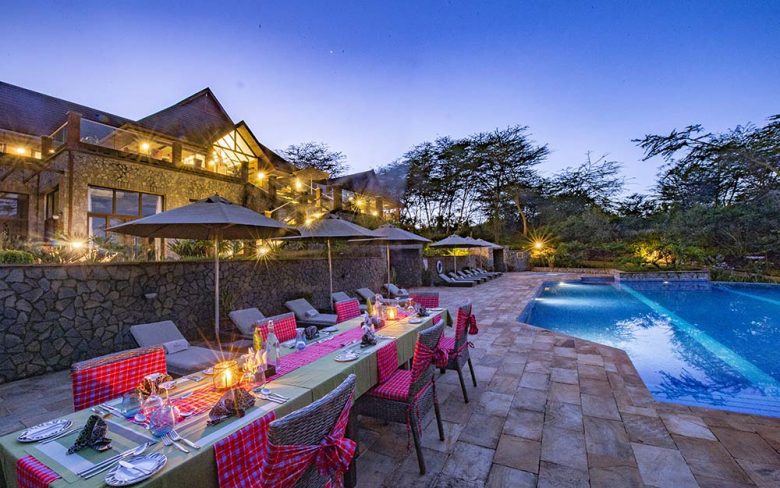
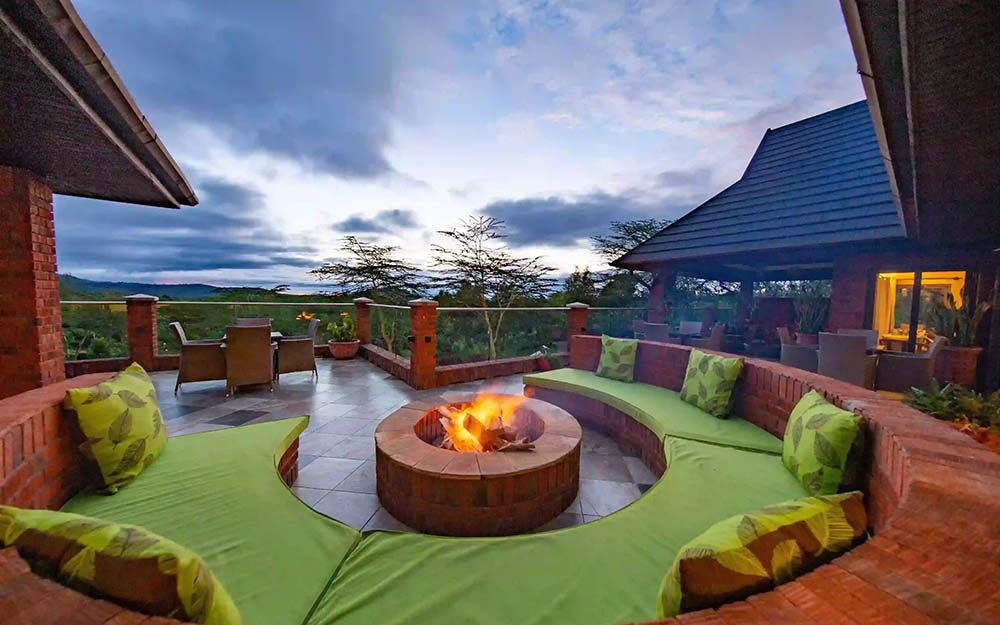
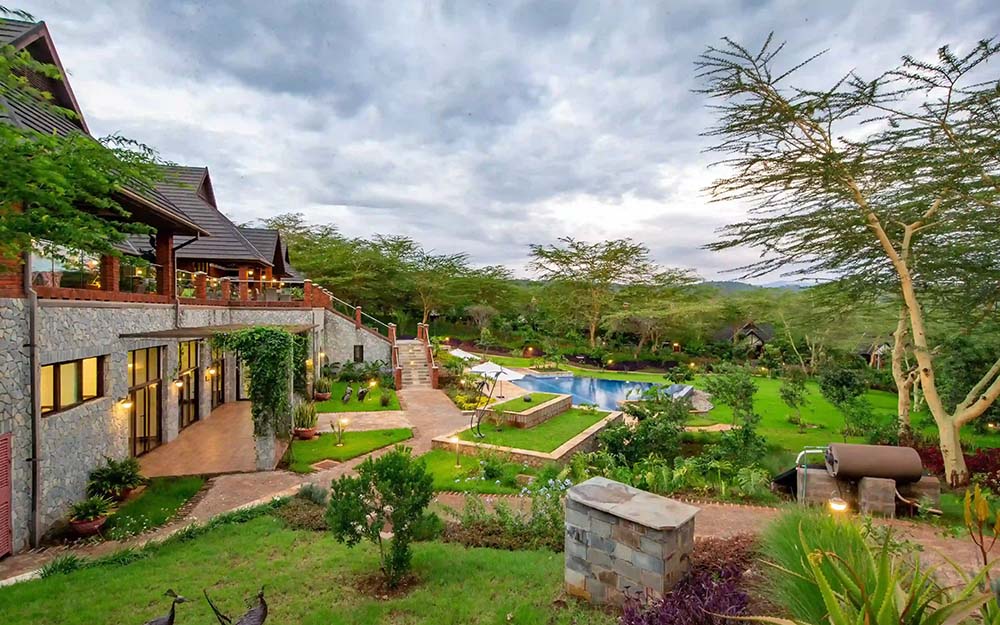
There are lodges and tented camps inside Tarangire and in the concession areas around it, which suit a night or two of game drives. Many travellers instead visit Tarangire on the way to Karatu and sleep there, so they are close to the Ngorongoro Crater for the next morning. Our lodge, The Retreat at Ngorongoro, is in the Tloma area of Karatu, 1.5 to 2 hours from Tarangire, with an infinity pool that is very welcome after a hot day. See our villas or the best lodges in Karatu.
Practical tips
- Wear light, neutral colours against tsetse flies and the heat.
- Bring binoculars; the birds alone make them worthwhile.
- Carry plenty of water and a hat.
- Start early. Animals are most active in the cool of the morning.
- Ask your guide about the southern swamps if you have a full day.
Questions about Tarangire National Park
Is Tarangire worth visiting?
Yes, especially from June to October, when it has some of the best elephant viewing in Africa, along with baobabs, lions and superb birdlife.
How much is the Tarangire entry fee?
Based on published 2026 rates, about US$59 per non-resident adult and about US$18 per child aged 5 to 15, per day, plus vehicle and guide fees.
How far is Tarangire from Karatu?
About 1.5 to 2 hours by road.
Can you see the Big Five in Tarangire?
Elephant, buffalo and lion are seen regularly and leopard occasionally. There are no rhinos; for rhino, visit the Ngorongoro Crater.
Is Tarangire better than Lake Manyara?
In the dry season, Tarangire usually offers more wildlife, especially elephants. Lake Manyara is closer to Karatu and good for birds and scenery all year.
Adding Tarangire to your safari? Check availability for your nights in Karatu.