
Lake Manyara National Park is a compact park at the foot of the Rift Valley escarpment, best known for its shallow soda lake, its flamingos and its tree-climbing lions. It is small, easy to reach and very green, with groundwater forest, acacia woodland, grassy floodplains and hot springs packed into a narrow strip between the escarpment wall and the lake. For many travellers, it is the first park of a northern Tanzania safari, and it is only about 30 minutes from Karatu.
This guide covers what makes Lake Manyara special, what you can see and do, fees, the best time to visit and how to fit it into a safari.
Lake Manyara at a glance
| Fact | Detail |
|---|---|
| Location | Next to Mto wa Mbu, at the foot of the Rift Valley escarpment |
| Size | About 650 km², with the lake covering much of it in wet years |
| Managed by | Tanzania National Parks (TANAPA) |
| Entry fee | About US$59 per non-resident adult, about US$18 per child aged 5 to 15 (2026 published rates) |
| Time needed | Half a day to a full day |
| From Karatu | About 30 minutes to the main gate |
| Known for | Tree-climbing lions, flamingos, elephants, baboon troops, birdlife, hot springs |
What makes Lake Manyara special
Lake Manyara squeezes several habitats into a small area. Just inside the gate is a groundwater forest, fed by springs seeping from the escarpment, with tall mahogany and fig trees, troops of olive baboons and blue monkeys. Beyond it, the forest gives way to acacia woodland, open grassland and the lake shore.
The lake is alkaline and shallow, and its size changes a lot from year to year. When conditions are right, flamingos gather in large numbers along the shore, joined by pelicans, storks and other waterbirds.
The tree-climbing lions
Lake Manyara is famous for lions that rest in the branches of acacia trees. Nobody is completely sure why they do it; suggestions include escaping biting flies, catching a breeze or getting a better view. Sightings are never guaranteed, and in some years they are rare, but seeing a lion stretched along a branch is a highlight when it happens.
What you can see
- Elephants: often in the forest and woodland.
- Olive baboons: large troops, sometimes hundreds strong, especially near the forest.
- Giraffe, zebra, wildebeest and buffalo: on the floodplains and grassland.
- Hippos: at the hippo pool near the lake shore.
- Lions: including the famous tree-climbers, though sightings vary.
- Blue monkeys, bushbuck and dik-dik: in the forest.
- Birds: hundreds of species, including flamingos, pelicans, yellow-billed storks, crowned eagles and silvery-cheeked hornbills.
Things to do in Lake Manyara
- Game drives: half-day or full-day drives along the park’s main road and loops.
- Hot springs: the Maji Moto hot springs at the southern end of the park, a long drive from the gate on a full-day trip.
- Treetop walkway: a canopy walkway through the forest has operated in the park; check whether it is open when you travel.
- Canoeing: offered seasonally when water levels allow.
- Night game drives: available through some operators with permits.
- Birdwatching: one of the best parks in northern Tanzania for birds.
Best time to visit Lake Manyara
- June to October: dry season. Easier game viewing and fewer mosquitoes.
- November to May: green season. Lush forest, waterfalls on the escarpment, migratory birds and more water in the lake. Some tracks can be muddy in April.
Lake Manyara is beautiful all year. Many guides prefer it in the green season for birds and scenery.
Is Lake Manyara worth it? An honest view
Lake Manyara divides opinion more than any other park in northern Tanzania, and it helps to know why before you go.
- It is green and dense. The forest and thick bush that make the park so beautiful also hide animals. On some drives you see elephants and baboons at every bend; on others the trees win. A guide who knows where animals have been seen recently makes a big difference.
- Water levels have changed. In recent wet years, the lake has risen well beyond its usual shore, flooding parts of the lakeside plains and some tracks and killing patches of trees. Depending on the year, some lakeside loops may be closed or under water. Ask your operator which areas are open when you travel.
- It works best as a first park. After the Ngorongoro Crater or the Serengeti, Manyara can feel quiet. As an introduction on Day 1, with birds, baboons, elephants and forest, it is a lovely start.
- Half a day is often enough. A morning covers the forest, the hippo pool and the northern plains. Go for a full day only if you want the hot springs in the south or are a keen birder.
Tsetse flies
Like Tarangire, parts of Lake Manyara’s woodland have tsetse flies, which give a sharp bite. They are attracted to dark blue and black, so wear light, neutral colours, keep vehicle windows closed in tsetse areas and use repellent. Most visitors find them an annoyance rather than a problem.
A typical half-day route
Enter at the main gate near Mto wa Mbu, drive slowly through the groundwater forest looking for blue monkeys, baboons and elephants, stop at the hippo pool near the lake shore, then continue south across the floodplains and acacia woodland where giraffe, zebra, buffalo and, with luck, lions in the trees are found. Turn back after three to four hours, or continue to the hot springs on a full day.
Where to stay
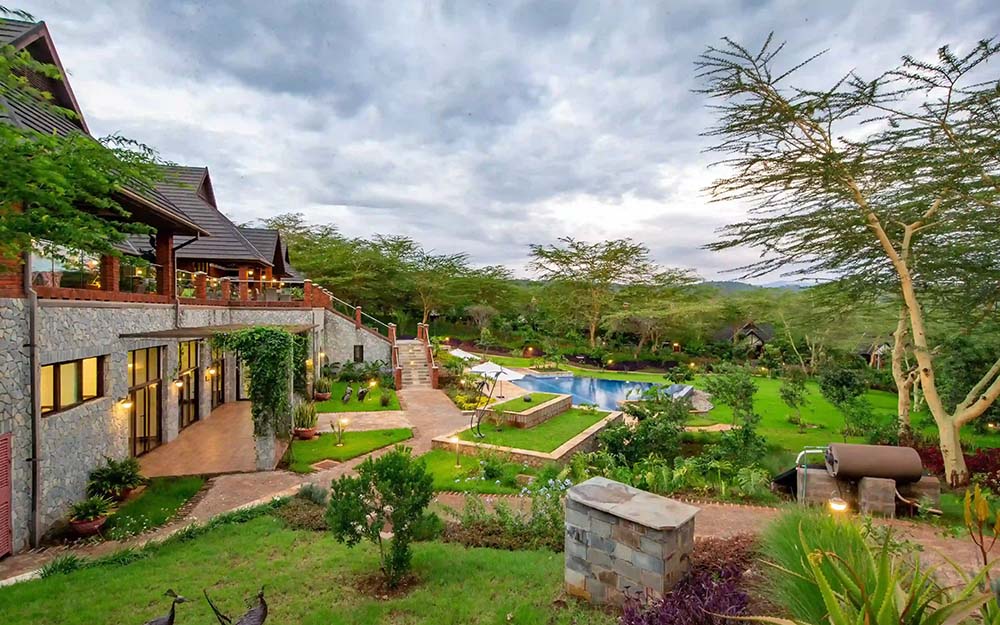
There are only a couple of places to stay inside the park, including a high-end tree lodge in the south, and several lodges on the escarpment above it with views over the lake. Most visitors stay in Mto wa Mbu or Karatu. Karatu, about 30 minutes away, also puts you close to the Ngorongoro Crater, so you can visit both from one base.
How to fit Lake Manyara into your safari
- On the way in: a half-day game drive on the drive from Arusha or Tarangire to Karatu.
- With Mto wa Mbu: a morning in the park, then a village tour and lunch in town. See our Mto wa Mbu guide.
- As a rest-day outing: from a Karatu base, after your crater day.
- On a 3-day safari: Tarangire, Lake Manyara and the Ngorongoro Crater. See our 3-day safari guide.
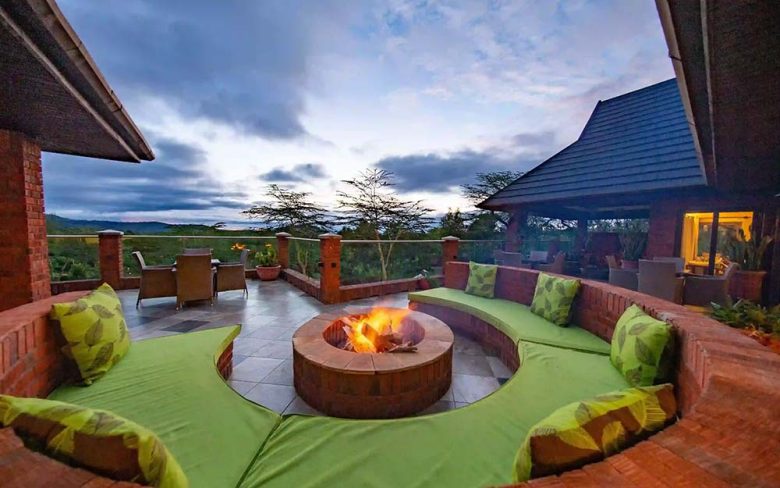
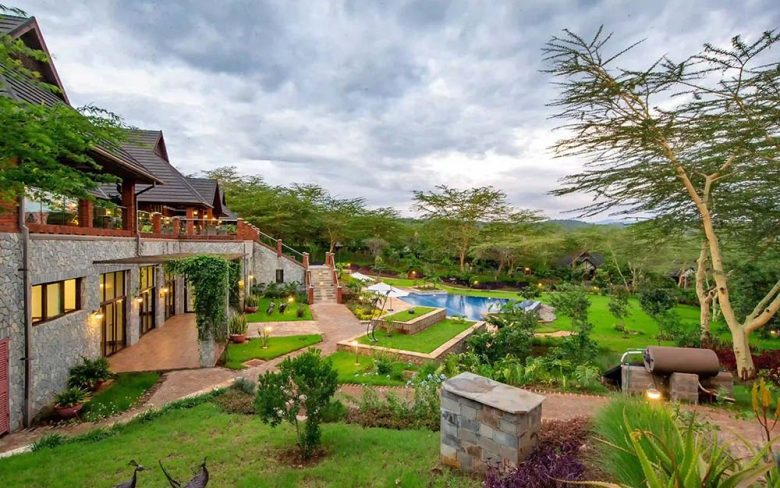
Our lodge in the Tloma area of Karatu is about 30 minutes from the Lake Manyara gate and 30 to 45 minutes from the Lake Manyara airstrip, so the park makes an easy half-day trip. See our villas or our guide to flying into Lake Manyara.
Questions about Lake Manyara National Park
Is Lake Manyara worth visiting?
Yes, especially for birds, scenery, elephants and baboons. It is a good first park and fits easily into a day between Arusha and Karatu.
How much is the Lake Manyara entry fee?
Based on 2026 published rates, about US$59 per non-resident adult and about US$18 per child aged 5 to 15, per day. Vehicle and guide fees are extra.
Will I see tree-climbing lions in Lake Manyara?
Possibly, but sightings are never guaranteed and vary from year to year.
How far is Lake Manyara from Karatu?
About 30 minutes by road to the main gate near Mto wa Mbu.
How long do you need in Lake Manyara?
Half a day covers the forest and northern areas. A full day lets you reach the hot springs in the south.
Visiting Lake Manyara and the crater? Check availability at our lodge in Karatu.